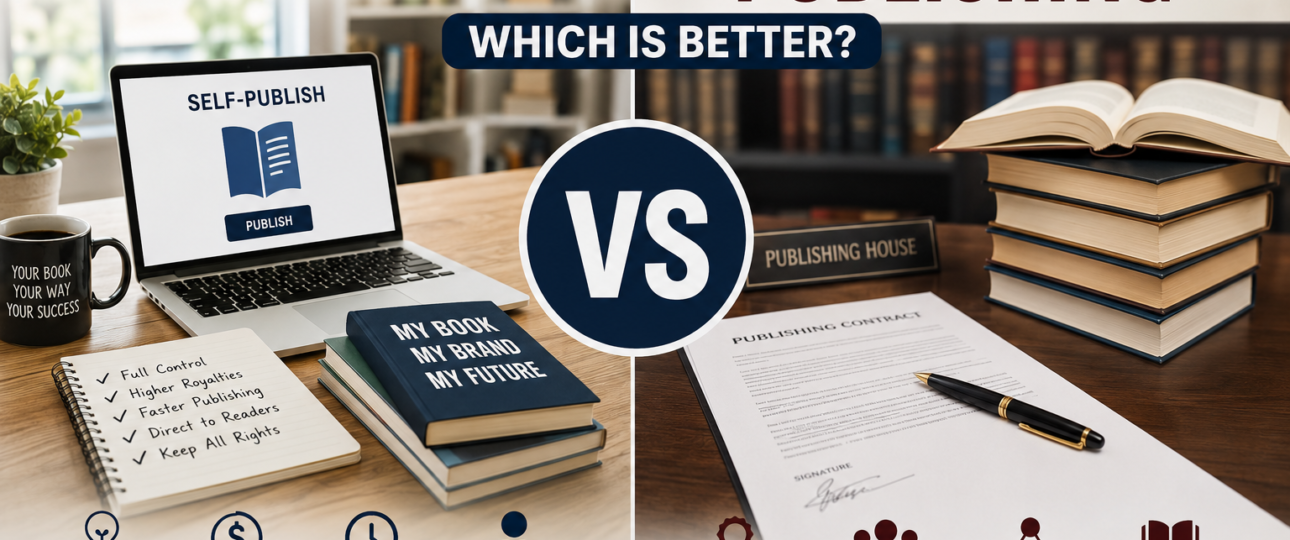
One of the biggest decisions every author faces is choosing between self-publishing vs traditional publishing. Both publishing methods offer unique advantages and challenges, and the right choice depends on your goals, budget, timeline, and creative preferences.
For first-time authors, the publishing world can feel confusing. Some writers dream of landing a traditional publishing deal, while others prefer the freedom and control of self-publishing platforms like Amazon Kindle Direct Publishing (KDP).
In this guide, we’ll compare self-publishing vs traditional publishing in detail so you can understand which publishing path is better for your book and long-term author goals.
What Is Self-Publishing?
Self-publishing allows authors to publish their books independently without relying on a traditional publishing company.
Authors manage or outsource services such as:
Today, platforms like Amazon KDP have made self-publishing easier and more accessible than ever before.
Many successful entrepreneurs, coaches, influencers, and first-time authors now choose self-publishing because it offers faster publishing timelines and higher royalty potential.
What Is Traditional Publishing?
Traditional publishing involves signing a contract with a publishing company that handles the production and distribution of your book.
Traditional publishers typically provide:
- Professional editing
- Book cover design
- Printing
- Distribution
- Some marketing support
In exchange, publishers usually take a large percentage of royalties and retain certain rights to the book.
Most traditional publishers require:
- Literary agents
- Proposal submissions
- Query letters
- Approval processes
This makes traditional publishing more competitive and time-consuming.
Self-Publishing vs Traditional Publishing: Main Differences
Understanding the key differences between self-publishing and traditional publishing can help authors make smarter decisions.
Creative Control
Self-Publishing
Authors maintain complete creative control over:
- Cover design
- Pricing
- Book content
- Branding
- Marketing decisions
Traditional Publishing
Publishers often make final decisions regarding:
- Book titles
- Covers
- Editing changes
- Release dates
- Marketing direction
Authors may have limited control over the final product.
Publishing Speed
Self-Publishing
Self-publishing is significantly faster.
A book can often be published within:
- A few weeks
- Or a few months
Depending on preparation and editing.
Traditional Publishing
Traditional publishing can take:
- 1–3 years
because of:
- querying agents
- contract negotiations
- editing cycles
- production schedules
Royalties and Earnings
Self-Publishing
Self-published authors usually earn:
- 35% to 70% royalties
depending on the platform and pricing.
Traditional Publishing
Traditional publishers typically offer:
- 5% to 15% royalties
after printing and distribution costs.
However, some publishers provide advance payments before publication.
Upfront Costs
Self-Publishing
Authors usually pay upfront for:
- Editing
- Design
- Formatting
- Marketing
Professional self-publishing requires investment for high-quality results.
Traditional Publishing
Traditional publishers cover most production costs if the book is accepted.
However, acceptance rates are extremely competitive.
Marketing Responsibilities
Self-Publishing
Authors are mainly responsible for marketing their books.
This includes:
- Social media promotion
- Ads
- Email marketing
- Author branding
- Book launch strategies
Traditional Publishing
Many first-time authors assume publishers handle everything — but most authors still need to market themselves actively.
Even traditionally published authors are expected to:
- build audiences
- promote books online
- participate in interviews and events
Acceptance and Accessibility
Self-Publishing
Anyone can self-publish a book.
There are no gatekeepers or approval requirements.
Traditional Publishing
Traditional publishing is highly selective.
Publishers receive thousands of submissions yearly, and many manuscripts are rejected.
Authors often spend months or years searching for representation.
Which Publishing Option Is Better for First-Time Authors?
The answer depends on your priorities.
Self-Publishing Is Better If You Want:
- Faster publishing
- Creative freedom
- Higher royalties
- Full ownership rights
- Control over branding
- Faster business growth
- More flexibility
Self-publishing works especially well for:
- entrepreneurs
- coaches
- consultants
- influencers
- niche experts
Traditional Publishing Is Better If You Want:
- Industry prestige
- Bookstore distribution
- Publishing validation
- Literary recognition
- Professional publisher backing
Traditional publishing may appeal more to:
- literary fiction authors
- academic writers
- authors seeking major publishing deals
What About Hybrid Publishing?
Hybrid publishing combines elements of both self-publishing and traditional publishing.
In hybrid publishing:
- authors often invest financially
- but receive professional publishing support
This may include:
- editing
- design
- marketing
- distribution assistance
Hybrid publishing has become increasingly popular among modern authors.
Common Myths About Self-Publishing
Myth #1: Self-Published Books Are Low Quality
Not true.
Many self-published books are professionally written, edited, and designed.
Some self-published authors earn more than traditionally published writers.
Myth #2: Traditional Publishers Handle All Marketing
Most publishers expect authors to actively market themselves.
Personal branding and audience-building remain essential.
Myth #3: Self-Publishing Is Easy
While publishing platforms are accessible, successful self-publishing still requires:
- planning
- editing
- branding
- marketing
- strategy
Professional guidance often improves results significantly.
How to Decide Between Self-Publishing vs Traditional Publishing
Before choosing your publishing path, ask yourself:
- How quickly do I want to publish?
- Do I want creative control?
- Am I comfortable marketing my book?
- Do I want higher royalties?
- Am I seeking prestige or independence?
- What is my budget?
- What are my long-term goals as an author?
Your answers will help determine the best publishing route for your needs.
Why Many Authors Choose Self-Publishing Today
The publishing industry has changed dramatically over the last decade.
Today, self-publishing offers:
- global distribution
- faster publishing
- direct audience access
- strong earning potential
- business opportunities
Many successful authors now use books to:
- build authority
- generate leads
- grow businesses
- create speaking opportunities
- strengthen personal brands
Because of this, self-publishing continues to grow rapidly worldwide.
Final Thoughts
Choosing between self-publishing vs traditional publishing is a personal decision that depends on your goals, timeline, and publishing vision.
Traditional publishing offers prestige and industry recognition, while self-publishing provides speed, control, and higher profit potential.
For many modern authors — especially entrepreneurs and professionals — self-publishing has become one of the most effective ways to share expertise and build authority quickly.
No matter which route you choose, investing in professional editing, branding, and marketing is essential for long-term success.
The best publishing strategy is the one that aligns with your goals as an author.
FAQ Section
Is self-publishing better than traditional publishing?
Self-publishing is better for authors seeking speed, control, and higher royalties, while traditional publishing offers prestige and industry backing.
Can self-published books become successful?
Yes. Many self-published authors achieve strong sales, build audiences, and create successful author businesses.
How much do self-published authors earn?
Self-published authors typically earn higher royalty percentages than traditionally published authors, depending on book sales and pricing.
Is traditional publishing difficult to get into?
Yes. Traditional publishing is highly competitive and often requires literary agents and lengthy submission processes.
Which publishing option is faster?
Self-publishing is significantly faster and can allow authors to publish within weeks or months.
Ready to Publish Your Book?
BooksNova helps authors prepare their manuscripts and publish their books professionally so they can share their work with readers worldwide.
Schedule Publishing Consultation Get a Publishing Quote