
Books Nova

Personal branding for authors guide showing how writers build trust, visibility, and long-term success

Why Personal Branding Matters for Authors: Build Trust, Visibility, and Long-Term Success

Publishing a great book is only the beginning of an author’s journey. In today’s competitive publishing industry, readers don’t just buy books… they connect with the people behind them. That’s why personal branding matters for authors more than ever. Whether you’re a first-time author, entrepreneur, coach, or seasoned writer, building a strong personal brand can help you attract readers, establish credibility, and create opportunities far beyond book sales. In this guide, we’ll explain why personal branding matters for authors, how to build an authentic author brand, and the strategies successful authors use to grow their audience. What Is Personal Branding for Authors? Personal branding is how readers, publishers, media outlets, and potential clients perceive you as an author. Your personal brand includes: A strong author brand helps readers recognize your work and builds trust over time. Why Personal Branding for Authors Matters A book introduces readers to your ideas, but your personal brand keeps them engaged long after they’ve finished reading. Here are the biggest reasons why personal branding matters for authors. 1. Builds Trust and Credibility Readers are more likely to buy books from authors they trust. A professional website, consistent messaging, and an active online presence demonstrate that you’re serious about your work and committed to your audience. Trust is one of the most valuable assets an author can build. 2. Helps Readers Remember You Thousands of new books are published every day. A memorable personal brand helps readers recognize your name, remember your books, and recommend your work to others. Consistency across your website, social media, author bio, and book covers strengthens your identity. 3. Creates More Book Sales People often buy books because they trust the author behind them. A recognizable brand encourages repeat purchases, referrals, and loyal readers who follow your future releases. Personal branding doesn’t replace marketing—it makes marketing more effective. 4. Opens New Career Opportunities Many successful authors earn income from more than just book sales. A strong personal brand can lead to: Your book becomes the foundation of a much larger professional presence. 5. Improves Online Visibility Search engines and AI-powered platforms reward authors with a clear digital presence. Building your personal brand through: Helps more people discover your work online. Essential Elements of Personal Branding for Authors Building an author brand doesn’t happen overnight, but focusing on these elements creates a solid foundation. Professional Author Website Your website serves as your online home where readers can: A professional website increases credibility and helps readers connect with your work. Consistent Visual Identity Use consistent: Consistency makes your brand recognizable. Professional Author Bio Your author bio should clearly explain: Update it regularly as your career grows. Active Social Media Presence You don’t need to be everywhere. Choose two or three platforms where your readers spend time and consistently share: Authenticity matters more than perfection. Email Newsletter Email remains one of the most effective ways to build long-term relationships with readers. Use newsletters to share: Unlike social media, your email list belongs to you. Common Personal Branding Mistakes Authors Make Many authors unintentionally weaken their brand by making these mistakes: Building relationships is just as important as promoting your books. How Books Nova Supports Personal Branding for Authors At Books Nova, we believe publishing a book is only the first step toward becoming a successful author. Our author branding services include: Our goal is to help authors create lasting visibility and credibility. Frequently Asked Questions Why is personal branding important for authors? Personal branding helps authors build trust, attract readers, improve visibility, and create opportunities beyond book sales. Do first-time authors need personal branding? Yes. Building your personal brand early helps establish credibility and makes it easier to grow your audience over time. What is the best way to build an author brand? Start with a professional website, a consistent author bio, active social media profiles, and regular communication with readers through an email newsletter. Can personal branding increase book sales? Yes. Readers are more likely to purchase books from authors they recognize and trust. A strong personal brand encourages repeat readers and word-of-mouth recommendations. How long does it take to build an author brand? Personal branding is an ongoing process. Consistency, valuable content, and genuine engagement with readers help build a strong reputation over time. Final Thoughts Writing a great book is an incredible achievement, but building a recognizable personal brand is what transforms authors into trusted experts and long-term successes. Readers don’t simply connect with books—they connect with people, stories, and authentic voices. Investing in your personal brand today can lead to stronger reader relationships, greater visibility, increased book sales, and exciting new opportunities throughout your author career. If you’re ready to establish yourself as a professional author, now is the perfect time to start building a brand that readers will remember. Ready to Build Your Personal Branding for Authors Strategy? Books Nova helps authors write, publish, market, and build powerful personal brands that stand out in today’s competitive publishing landscape. Whether you’re publishing your first book or growing an established author career, our team is here to help you succeed. Write • Publish • Grow with Books Nova.

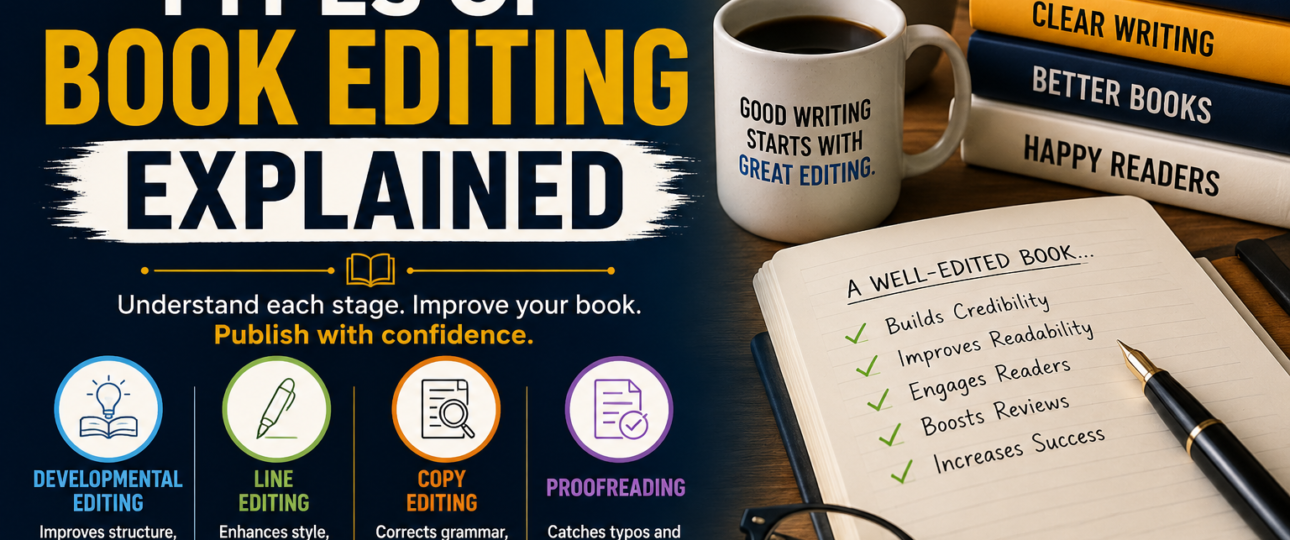
Different types of book editing explained

Different Types of Book Editing Explained

Understanding the different types of book editing is essential for authors who want to publish professional, high-quality books. Many first-time writers believe editing only involves fixing grammar mistakes, but professional editing includes several important stages that improve structure, clarity, readability, and overall book quality. Each type of book editing serves a different purpose during the publishing process. Whether you are self-publishing or pursuing traditional publishing, knowing which editing service your manuscript needs can dramatically improve your final book. Why Understanding the Types of Book Editing Matters Many authors skip editing or misunderstand what editors actually do. However, publishing a book without proper editing can lead to: Understanding the different types of book editing helps authors choose the right editing process for their manuscript and publishing goals. Types of Book Editing: Developmental Editing Explained Developmental editing is one of the earliest and most important stages of book editing. This type of editing focuses on: Developmental editors look at the “big picture” of the manuscript rather than sentence-level corrections. For nonfiction books, developmental editing may help improve: For fiction books, it helps strengthen: Developmental editing is ideal for early drafts that need structural improvement. Types of Book Editing for Better Writing Style Line editing focuses on improving sentence flow, tone, and readability. This type of book editing helps: Line editors carefully review the writing style line by line to create smoother and more engaging content. Authors who want their writing to sound more polished and professional often benefit greatly from line editing. Copy Editing as an Important Type of Book Editing Copy editing focuses on technical writing accuracy. This stage corrects: Copy editors also check: Copy editing is essential before publishing because even small mistakes can negatively affect reader experience and author credibility. Proofreading Is the Final Editing Stage Proofreading is the final review completed before publishing. This type of book editing focuses on catching: Proofreading happens after all major editing revisions are completed. Many authors mistakenly think proofreading alone is enough, but proofreading is only the final polishing stage rather than a complete editing solution. Which Type of Book Editing Do Authors Need? The type of editing needed depends on the condition of the manuscript. For example: Some authors benefit from multiple editing stages to achieve professional publishing quality. Professional editors often evaluate manuscripts before recommending the best editing approach. Types of Book Editing for Self-Published Authors Self-published authors especially need professional editing because they compete directly with traditionally published books. Poor editing can result in: Investing in the right type of book editing helps self-published authors improve publishing quality and reader satisfaction. Professional Editing Improves Publishing Success Professional editing improves: Well-edited books are more likely to: Strong editing also helps authors build long-term credibility and stronger author brands. Why Authors Should Not Skip Editing Many authors avoid editing to save money, but poor editing often becomes far more expensive later through: Even experienced writers work with professional editors because outside feedback improves manuscript quality significantly. Professional editing transforms rough manuscripts into polished books readers can trust and enjoy. Final Thoughts Understanding the different types of book editing helps authors make smarter publishing decisions and improve manuscript quality. From developmental editing and line editing to copy editing and proofreading, each stage plays an important role in creating professional books. Whether you are preparing your first manuscript or publishing multiple books, professional editing is one of the best investments you can make for long-term publishing success. If you need editing, formatting, ghostwriting, or publishing support, Books Nova can help guide you through every stage of the publishing journey. Frequently Asked Questions What are the main types of book editing? The main types of book editing include: Each stage focuses on improving different aspects of the manuscript. What is developmental editing? Developmental editing focuses on improving story structure, pacing, organization, character development, and overall manuscript flow. What is the difference between copy editing and proofreading? Copy editing corrects grammar, punctuation, consistency, and technical writing issues, while proofreading focuses on final minor corrections before publishing. Do self-published authors need professional editing? Yes. Professional editing helps self-published authors improve quality, credibility, reader satisfaction, and publishing success. Which type of editing should authors start with? Authors usually begin with developmental editing for rough drafts and move toward copy editing and proofreading as the manuscript becomes more polished.

Shopping cart close